Supporting existing and new growers with practical advice and resources
About the Kentish Cobnuts Association
Rooted in Tradition. Growing for the Future.
Behind every cobnut is a grower, and behind every grower is a story worth preserving. The KCA connects enthusiasts, farmers, and heritage food lovers across the UK to keep the cobnut tradition thriving.

Our purpose
Supporting Growers into the future. Preserving Heritage.
The Kentish Cobnuts Association is a National Membership association tasked with Promoting and Conserving British Hazelnuts.
We were established in 1990, with the aims of regenerating the industry and promoting Kentish Cobnuts and British Hazelnuts.

Who we help
For Growers, Enthusiasts and the Nut-Curious
Whether you’re planting your first tree or managing a historic orchard, the KCA offers practical support and a welcoming community.
Our members include:

"The KCA has been my lifeline as a small-scale grower. Their workshops taught me pruning techniques that doubled my yield, and their collective marketing means I can focus on quality while they handle promotion. It’s more than an association - it’s a family."
Thomas, Faversham
"When I took over my father’s orchard, the KCA welcomed me with open arms. Their membership paired me with veteran growers, and now I’m proud to say our cobnuts supply Michelin-starred kitchens. Heritage farming thrives because of them."
Margaret, Canterbury
Our History
From Decline to Revival.
The Kentish Cobnuts Association (KCA) was founded in 1990 to protect and promote a very special part of British agricultural history – the Kentish Cobnut.
The Kentish Cobnut is a heritage and cultivated variety of hazelnut that was once a staple crop of the Garden of England, cobnuts had seen a dramatic decline throughout the 20th century until passionate growers, led by John Cannon MBE of Roughway Farm, established the KCA to regenerate the industry, provide resources to growers, and raise public awareness of this delicious, traditional British nut.
They also needed to respond to a (then EC) ruling to reduce the moisture content of hazelnuts, this would have impacted the Kentish Cobnut as a specially cultivated British Hazelnut that is often sold and enjoyed fresh. The association successfully lobbied government and achieved a derivation for the Kentish Cobnut as fresh British grown hazelnut.


As interest in nut growing has expanded across the UK, the Association has naturally evolved to support a wider community of growers. Today, alongside our historic role, we also represent those growing British hazelnuts more broadly — including a range of varieties and production systems.
Indeed, some members prefer to grow varieties that are more commonly referred to and marketed as hazelnuts. British grown hazelnuts are often spherical and are usually dried before eating and for flavour development.
In 2019/20, following member consultation the KCA formerly adopted the strapline Conserving and Promoting British Hazelnuts. This was to reflect the increasing membership outside of Kent and the increasing variety of hazelnuts grown. The association also began organising more events outside of Kent and its Committee members began speaking at national events
Today, the KCA has over 160 members and continues to support both professional growers and passionate amateurs, ensuring cobnuts and hazelnuts remain a vibrant part of the UK’s rural and culinary landscape.
Kentish Cobnut and British Hazelnuts?
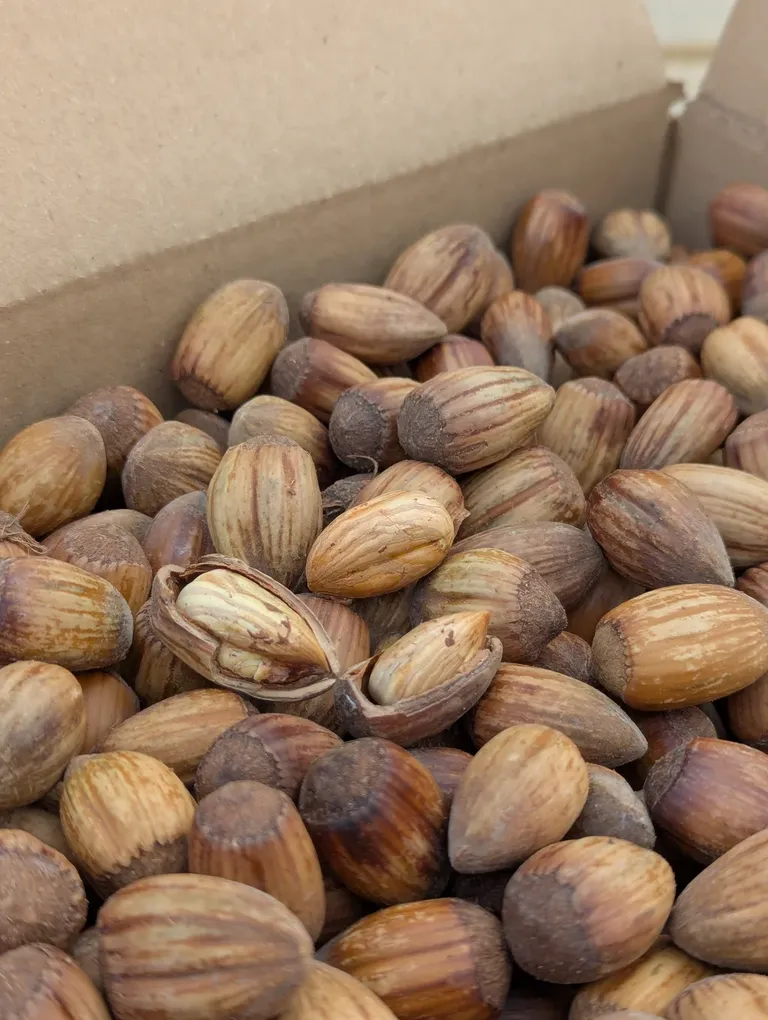
Kentish Cobnut (Kent Cob, Kent Cobnut) is an oval shaped heritage hazelnut variety. It is typically harvested and sold fresh (green/golden) with its husk for the premium seasonal market between August through to October. It has a creamy moreish flavour when fresh unlike other varieties that often need to be dried for flavour development.
Due to its breeding for early flavour, when Kent Cob is dried and roasted it has a fantastic warmth and sweetness. Providing a significant flavour profile during the different stages. More growers are now offering dried and roasted Kentish Cobnuts.
Cobnuts – There are some other hazelnuts bred for fresh eating. These can be referred to as cobnuts. Kentish Cobnut is a specific variety.
British hazelnuts are spherical and are usually dried before eating unlike Kentish Cobnuts. They can include a wide range of varieties suited to different systems and scales of production. British grown hazelnuts have exceptional flavour and are noticeably better than imported hazelnuts that are often smaller and less fresh. Because hazelnuts are dried, they are very good for cooking and processing businesses.
Both are part of the same crop family, and both have an important role to play in the future of British nut production with both crops experiencing significant growth.
Be part of the Cobnut revival
Joining the Kentish Cobnuts Association gives you access to expert knowledge, exclusive resources, member events, and a warm community of growers and nut-lovers. It’s also a way to actively support British heritage food and sustainable farming.
Ready to get involved? Become a member today and help keep a proud British growing tradition alive.